14 September 2026

04 February 2026
To say the Ukraine conflict has changed modern warfare would be an understatement. Although both sides possess sophisticated missiles and anti-missile technologies, relatively cheap, mass produced remotely piloted platforms, or drones, and loitering munitions such as the Iranian-designed Shahed have caused much of the damage.
Kyiv’s audacious offensive last June on air bases deep inside Russian territory, using simple weaponised drones concealed in and launched from trucks, which destroyed or damaged 10 military aircraft, was the most prominent example of how significant this asymmetric threat has become. It has led governments and security services the world over to reassess the vulnerability of not just their military sites but critical infrastructure, such as airports and power stations, to such attacks.
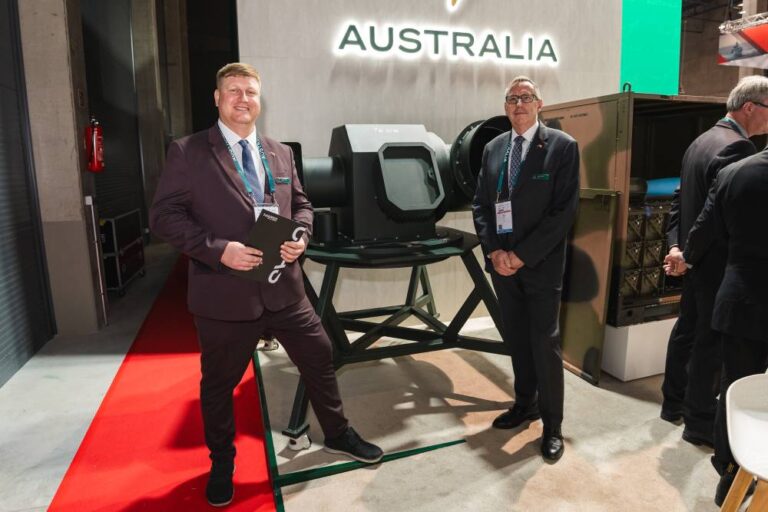
One Singapore air show exhibitor believes it has a solution. Electro Optic Systems (EOS) is showcasing its counter-drone defence products, including its Apollo 50-150kW range high-energy laser weapon designed to disrupt swarms of drones, and its Slinger kinetic, cannon-linked, remote weapon system.
EOS says countries including France, Germany and the UK have selected the Slinger, and 200 units are in service in Ukraine, while in August the Netherlands became the first customer for Apollo. EOS has begun delivering the equipment from its Singapore facility with final shipments expected in 2028.
Group chief executive Andreas Schwer (pictured) says while cannon-based counter-drone systems can destroy up to five aircraft per minute, Apollo can deal with 30, “and we are working on increasing that”.
EOS’s business model is to licence its technology to domestic defence companies, such as Diehl, Safran, and MBDA.
Another part of its business, based in Australia, focuses on laser equipment that tracks and destroys space debris, effectively by burning a hole in the metal and forcing an atmospheric re-entry.
Earlier this year, EOS diversified into interceptors after buying a start-up UK business from MARSS Group. These so-called kamikaze drones have a range of up to (2.7nm (5km) – beyond that of the company’s remote weapon systems – so are “complementary” to and can be integrated with the rest of its portfolio, says Schwer.
He says EOS’s aim is to become the “number one” in counter-drone technology outside the USA, a country largely unwilling to allow its expertise in this field to be exported.