16 February 2026

29 January 2026
By Kym Bergmann, APDR
The scale of the threat extends well beyond the conventional battlespace and now includes civil infrastructure anywhere in the country. Just as Russia is targeting Ukrainian schools, hospitals and the power grid, so Kiev is hitting Russia’s energy infrastructure – oil exports are funding the invasion - in addition to strictly military targets.
This has pushed both countries into evolving their air defence systems to be able to deal with these new threats. Ukraine has had notably more success in protecting themselves – though large gaps remain – and a role in that effort has been played by Canberra-based EOS through the supply of a number of Remote Weapon Stations (RWS) carrying sensors and autocannons.
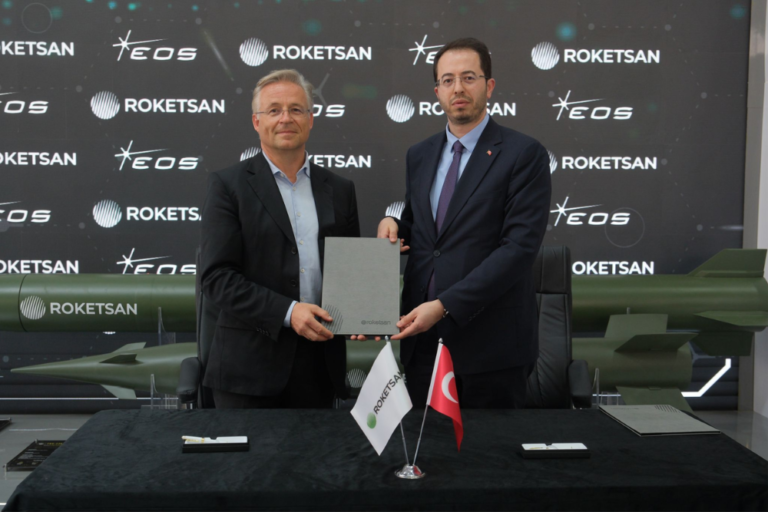
EOS has also developed high-powered laser systems and has sold units to the Netherlands in August 2025 – a contract worth around $125 million - and more recently South Korea. As well as developing two very powerful effectors in the form of lasers and gun systems, the company has now moved into the provision of entire anti-drone solutions based on the acquisition of specialist C2 supplier MARSS.
MARSS started from humble beginnings in 2006, providing short range anti-drone systems for high-value commercial targets such as superyachts. This rapidly evolved into defending critical energy infrastructure such as Saudi Arabia’s refineries that suffered a devastating Houthi drone and missile attack on 14 September 2019. These were so devastating that they cut the country’s oil production by 50%.
At the heart of MARSS is proprietary software called NiDAR, which EOS CEO Dr Andreas Schwer explained to APDR contains an Artificial Intelligence (AI) core that allows it to evaluate threat detections from multiple sensors and assign appropriate countermeasures. This is done faster than a human operator could manage. AI is a critical ingredient for defeating large numbers of fast incoming targets approaching from multiple directions.
Previously, EOS has used proprietary software for some of its stand-alone anti-drone products such as Taranis – which combines radar, electrooptic and EW information with laser and cannon countermeasures – but these are for point defence applications. The beauty of NiDAR is that it is networked and scalable, meaning that the company is now able to provide broad area defence, so long as enough sensors and effectors are available.
It also means that while EOS is more than capable of providing an entire turnkey system, if a customer instead wants to use – for example – their own radar or weapon, these can be integrated without risk. According to Dr Schwer, this level of flexibility is sometimes offered by some of the world’s largest defence equipment suppliers – but now EOS is in a position to provide a better performing system at a far lower price.
The Australian part of EOS will continue to focus on RWS deliveries, most significantly for a $108 million contract awarded in October 2024 by Hanwha Defence Australia. These will equip tracked Redback Infantry Fighting Vehicles (IFV) being built for the Army under LAND 400 Phase 3.
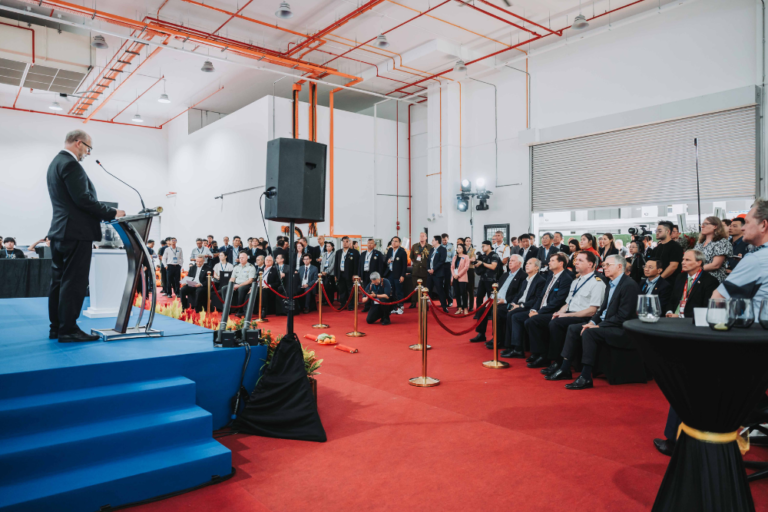
The high-powered lasers being supplied to the Netherlands and South Korea are being built in Singapore and the facility has the capacity to produce 20 units per year. This looks sufficient for global demand, especially as Dr Schwer anticipates that many future customers will insist on local production.
Currently, MARSS is located in Monaco, and the 80 or so staff will soon move to the hi-tech corporate and scientific cluster at the Sophia Antipolis located just outside Nice on the French Riviera. EOS is acquiring all of the defence assets of MARSS – about 95% of its total – and these will be integrated within the existing company structure.
The move just a few kilometres away to France is telling as it solidifies the European defence footprint of EOS. In parallel, the Netherlands has purchased the high-powered laser protective system not only for its own use but potentially for other members of NATO under a framework contract.
The Netherlands connection is significant because the Dutch Army is fully integrated with the German Army (Bundeswehr) just across the border. In the division of responsibility between the two countries, the Netherlands has been assigned air defence, which includes C-UAS missions. The Netherlands is also regarded as a neutral, honest broker by several other NATO members considering joint purchases.
Given the behaviour of the Trump administration, Europe will inevitably turn to far greater defence self-reliance and will place contracts with local entities rather than continue to buy from the now unreliable US.